
Hello Affiliates,
If you have ever helped a client with Italian citizenship (Jure Sanguinis) or a long-term visa, you know that the Italians don’t just like bureaucracy—they’ve practically turned it into an art form.
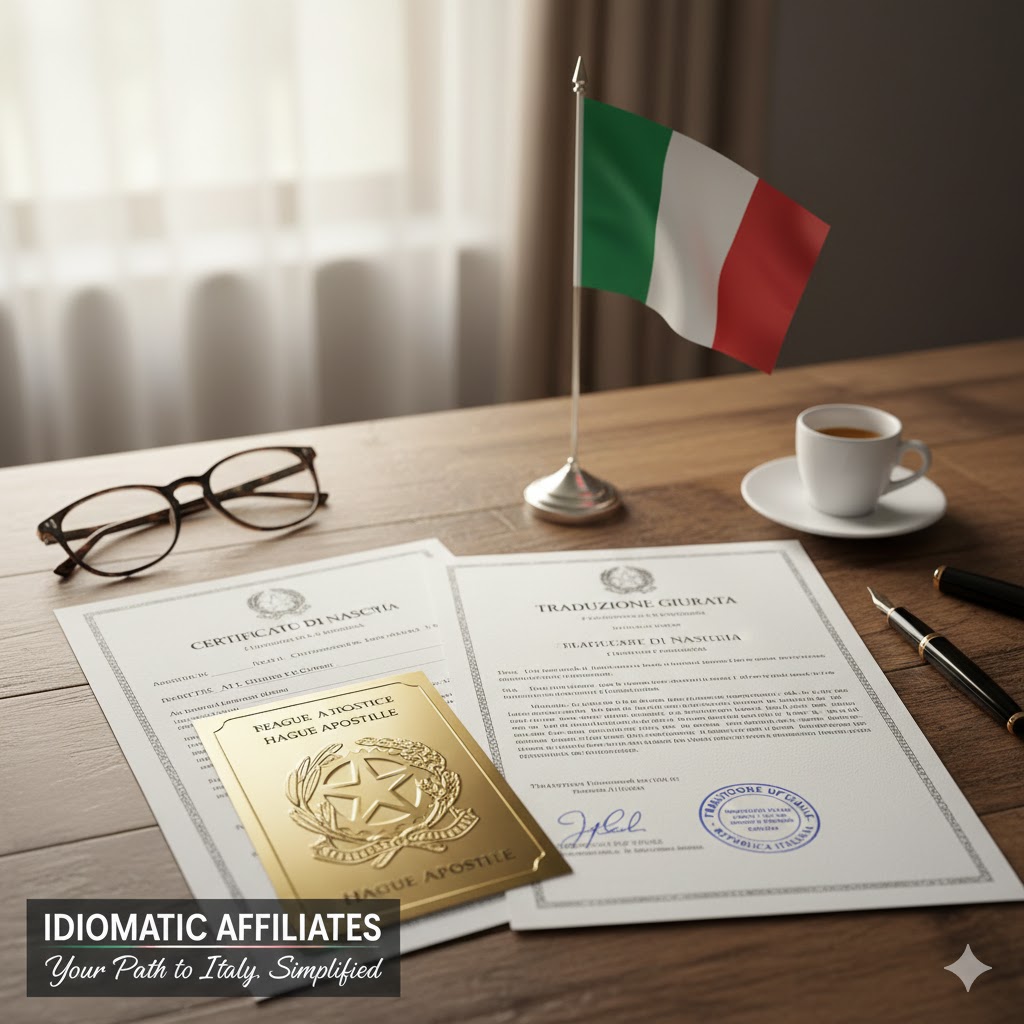
The Apostille itself is the easy part. Since Italy is a member of the Hague Convention, you manage the apostille for the original document (birth certificate, marriage license, etc.) just like you always do.
The real “head-scratching” begins with the Translation. Unlike the Spanish system where digital “Sworn Translations” are widely accepted, Italy is much more rigid.
Today, I want to break down the two paths your clients can take so you can guide them like a pro.
Option 1: The “Italian Official” Path (Slow & Expensive)
The Italian authorities generally prefer a translation done by an official translator registered in Italy.
- The Process: The translator must receive the physical, apostilled document. They then go before an Italian court or notary to “swear” to the accuracy.
- The Catch: These cannot be digital. They must be hard copies. This often involves expensive international shipping (DHL/FedEx) and high notary fees in Italy.
- Our Take: This is the “gold standard,” but it’s a logistical nightmare for a client sitting in the U.S.
Option 2: The “Apostilled Translation” Path (Fast & Efficient)
This is the route we recommend for most U.S.-based clients. Instead of sending everything to Italy, you stay local.
- The Process:
1. Get the original document apostilled.
2. We provide the certified translation of that document (including the apostille text). 3. You (or the client) then get that translation itself apostilled by the Secretary of State. - The Result: You now have two apostilles—one for the document and one for the translation. Under the Hague Convention, Italy is technically required to accept this “Double Apostille” package.
Our Recommendation: Go the Apostille Route
From a price perspective, it’s often a wash, but from a time and headache perspective, Option 2 wins every time.
It keeps the process within your control and avoids the “black hole” of Italian mail and court schedules.
A Pro Tip for Italian Cases
Always remind your clients to check with their specific Comune (town hall) or Consulate.
While the law is the law, Italian officials are famous for having “local preferences.”
Being the agent who asks, “Which path does your specific consulate prefer?” makes you look incredibly thorough.
We are here to help!
Dealing with Italy can feel like a game of chess. If you have a client with a stack of documents and you aren’t sure how to bundle the translation and apostille services:
- Email us your scenario: questions@idiomaticaffiliates.com
- Let’s map it out: Schedule a 1-on-1 with me here.
Let’s cut through the red tape together!
Gabe and the Idiomatic Affiliates Team
Leave a Reply